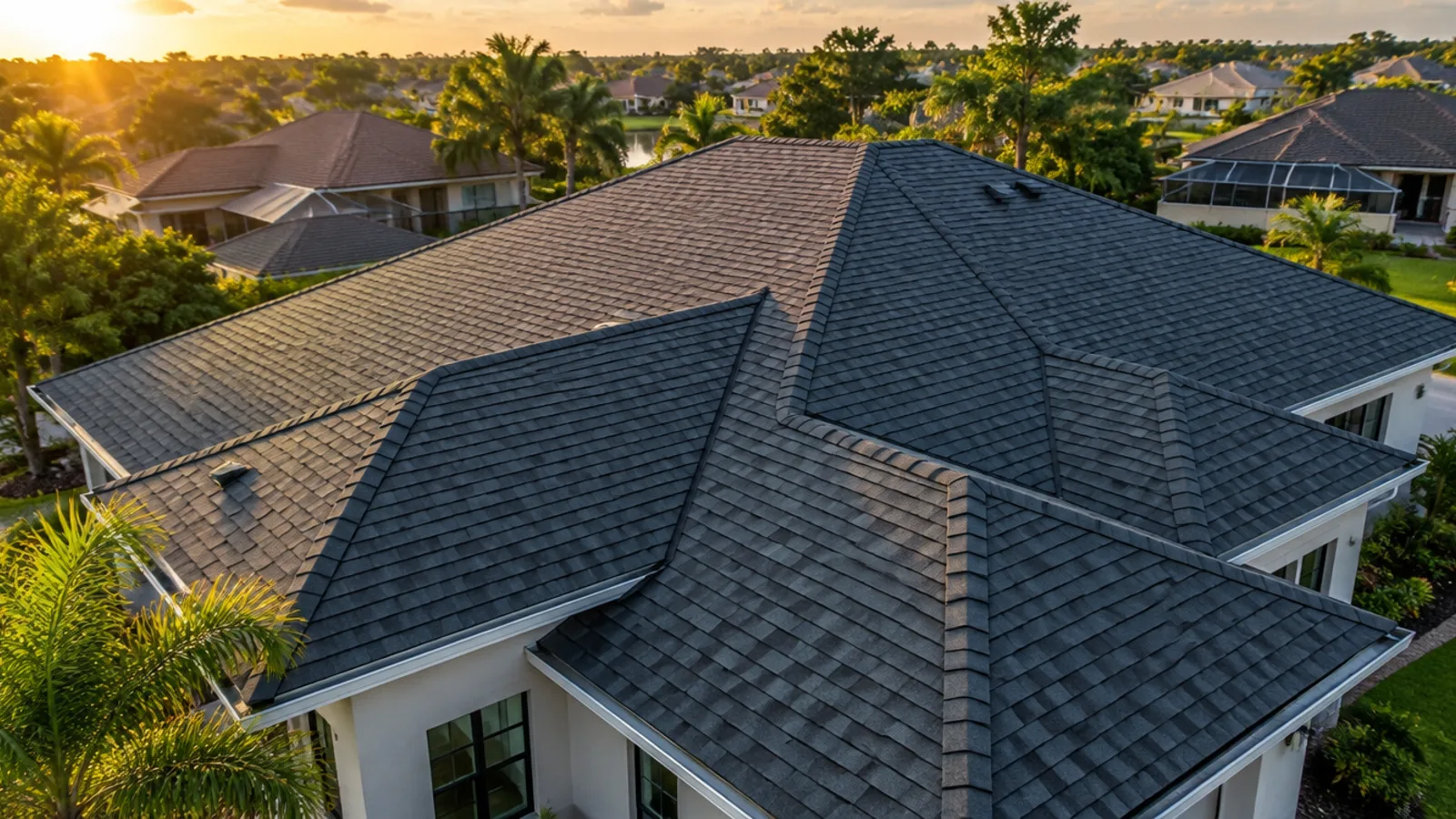
The damage nobody files a claim for
A storm does its damage in an afternoon. Everyday wear does it over months, a little at a time, and there is no single day you can point to. That is why it gets missed.
In Hernando County a roof sits under strong sun most of the year. It heats up hard in the afternoon, cools off overnight and gets rained on most summer days. Every one of those things works on the roof. None of them is dramatic.
This page is about that wear, not storm damage. If a storm just went through, start with the storm-damage guides on this site.
Sun on rubber and sealant
Every plumbing vent that comes through the roof has a boot around it, and on most shingle roofs the part that seals against the pipe is rubber. UV breaks rubber down. It hardens, shrinks and cracks, usually on the side facing the sun first. Once the collar splits, rain runs down the pipe and into the attic.
Sealant at penetrations goes the same way. The bead around an exhaust stack, a satellite mount or a flashing edge starts soft and flexible. Under Florida sun it dries out, pulls away from one side and splits. From the ground it can look fine. Up close there is a gap you could slide a card into.
This is the part of the roof with the shortest working life, and it fails long before the covering around it. A split boot on a roof that is otherwise sound is a repair, not a reason to replace the roof.
A split boot on a roof that is otherwise sound is a repair, not a reason to replace the roof.
Heat by day, cool by night
A roof deck expands in the afternoon heat and contracts when it cools after dark. It does that most days of the year. The movement is small, but it never stops.
Nails take the brunt of it. Each cycle works a fastener slightly in its hole, and over time some back out. A raised nail lifts the shingle above it, breaks the seal and can wear a hole through the shingle from underneath. That is a nail pop. It lets water in at a spot that has nothing to do with a penetration or a valley.
From the ground a nail pop looks like a small bump or a shingle tab that is not lying flat. In the attic it can show up as a rusty nail point with a dark ring of staining on the deck around it.
Limbs, leaves and water that sits
A branch that touches the roof does not need a storm to do damage. Every breeze moves it, and every move scrapes the surface. On a shingle roof it strips the granules first, then wears into the mat. Over months that becomes a bare patch in one spot, while the rest of the roof can look fine.
The same tree drops leaves and needles, and they collect in the valleys. A valley carries the runoff from two slopes. When it is blocked, the water has nowhere to go but sideways and under the covering. Debris also holds moisture against the roof long after the rain stops, which keeps the deck below it damp.
A deck that stays damp softens. You will not see it from the ground. It shows in the attic as dark staining along the valley line, or on the roof as a valley that gives slightly underfoot.
Granule loss and plain sun
The granules on an asphalt shingle are what protect it from UV. Shingles shed some granules their whole life, so a few in the gutter after a hard rain is normal.
A steady buildup at the bottom of a downspout is not normal. Neither are patches on the roof where the shingle looks darker and smoother than the rest. Those spots are losing their protection, and once the granules are gone the sun works directly on the asphalt. It dries out, gets brittle, curls at the edges and cracks.
We will not tell you how long a roof has left from a description of its granules. That depends on what we find when we look at it. What we can say is that bare patches and brittle shingles are worth looking at before the first leak, not after.