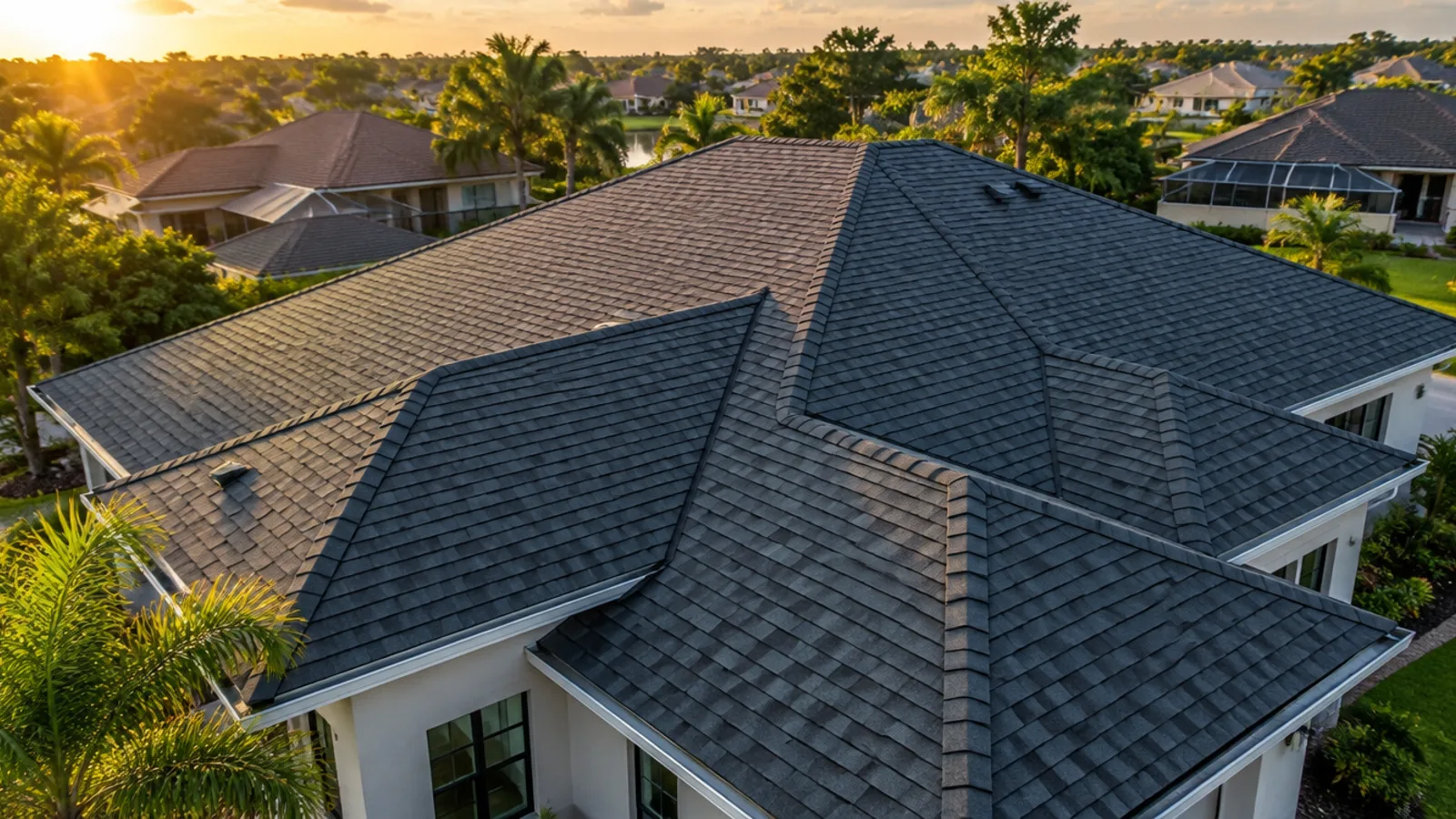
The deck is the part that decides everything above it
The deck is the plywood or OSB sheathing nailed across the rafters or trusses. It is the structural surface everything else attaches to, and nothing above it works right if it is not sound. Flashing has to be nailed into it. Shingles have to be nailed into it. Underlayment has to lie flat against it.
Wood that has gone soft, delaminated, or rotted from a slow leak will not hold a fastener the way dry, solid decking does. A nail that cannot grip means a shingle or a piece of flashing that can work loose under wind long before the material itself has worn out.
Nobody can see the condition of the deck while the old covering is still on it. It only becomes visible once that covering comes off, which is why a scope of work should say what happens if the decking underneath turns out to need more than expected, rather than assuming it is fine because nobody has looked yet.
This is also why deck condition, not just the shingle on top of it, belongs in how you think about the roof as a whole. A newer covering over a weak deck is still a weak roof.
Underlayment is the layer that actually keeps water out
Underlayment is the sheet material fastened directly to the deck, under the shingles. It is either asphalt-saturated felt or a synthetic sheet, and it is the layer doing the real waterproofing. The shingle layer on top of it is built to shed the bulk of the water, not to seal against it.
Wind-driven rain gets under shingle tabs more often than most people assume, especially on a roof that has taken any wind at all. When that happens, it is the underlayment lying against the deck that stops the water there instead of letting it reach the wood.
Some areas get a second layer of protection in the form of self-adhered underlayment, typically at eaves and in valleys, where water concentrates and sits longest. That extra layer is there because those spots see more water for longer than an open field of roof does.
Underlayment does its job unseen for the life of the roof. Nobody looks at it from the ground, and that is exactly why it belongs on this list: it is doing the most important job on the roof and gets the least attention.
The shingle sheds the water. The underlayment is what actually stops it.
Drip edge, valley metal, and step flashing: metal where water is forced to turn
Anywhere water changes direction or two roof planes meet, pressure builds and plain shingle coverage is not enough on its own. Those spots get metal instead.
Drip edge runs along the eaves and rakes, the outer edges of the roof. It directs water off the edge and away from the fascia and the edge of the deck instead of letting it curl back underneath the first row of shingles by capillary action.
Valley metal lines the open channel where two roof slopes meet and funnel water together. A valley carries far more water than any other equivalent stretch of roof, because it is collecting runoff from two planes at once, which is why it gets its own metal liner rather than relying on shingles alone.
Step flashing is the series of small, individual metal pieces woven in with each course of shingles where a roof plane meets a wall, such as at a dormer or a lanai tie-in. Each piece overlaps the one below it and tucks under the shingle above it, so water is carried down and out at every single course rather than finding a gap at the wall.
Boots and collars: every penetration is a hole someone had to seal
Every pipe, vent, or mount that comes up through the roof started as a hole cut in the deck. Each one gets a boot or a collar fitted around it to close that hole back up, and each one is a seam rather than a continuous surface.
Plumbing vent boots are the most common and the most likely to fail first. Most are built around a rubber collar that grips the pipe, and that rubber spends every day exposed to direct sun. UV exposure dries and cracks rubber over time, and once it cracks, water tracks straight down the outside of the pipe into the house.
HVAC stacks, skylights, and anything mounted to the roof deck — a satellite bracket, a solar attachment — get the same treatment: a collar or flashing built around the shape of the thing going through the roof, sized and sealed to that specific penetration.
A roof with a dozen plumbing stacks, a couple of HVAC vents, and a skylight has that many more seams than a plain field of shingle. None of that is a defect. It is just more places that need to be checked, because a penetration is where a roof is interrupted, not where it is strongest.
The shingle is the wear surface. Ventilation decides what happens underneath it
The shingle layer is what takes the sun, the wind, and the hail. Granules embedded in the surface shield the asphalt mat underneath from UV breakdown, and the shape and weight of the shingle are what hold up under wind. But the shingle is the wear surface, not the seal — that job belongs to the underlayment below it.
Ventilation is a separate system working on the space below the deck, and it needs two halves to function: intake and exhaust. Intake usually comes through the soffit, drawing in outside air at the low edge of the roof. Exhaust is higher up, at a ridge vent or similar, letting hot air leave at the peak. Moving air depends on both ends being open.
Exhaust without intake has nowhere to pull fresh air from, so it either does very little or starts drawing conditioned air out of the house itself through gaps and fixtures instead of from outside. Intake without exhaust has no path upward, so hot, moist attic air just sits under the deck with nowhere to go.
A stalled half of the system means heat and moisture build up against the underside of the deck and the back of the shingles, instead of moving through and out. That accelerates wear on both, and it is also the kind of thing a shingle manufacturer's warranty can require to be in place and working — worth checking before assuming a warranty is intact.