Age only means something next to the covering type
Age on its own tells you very little. A roof is a system, and what matters is the age relative to what the roof is covered with, how it was installed, how the attic underneath it is ventilated, and what it faces.
We will not give you a number of years for your covering type, and you should be careful with anyone who does. Two identical shingle roofs installed the same week on the same street can be in different condition, because one has a ventilated attic and one bakes, or because one takes the afternoon sun on a long unshaded slope and one sits under oak.
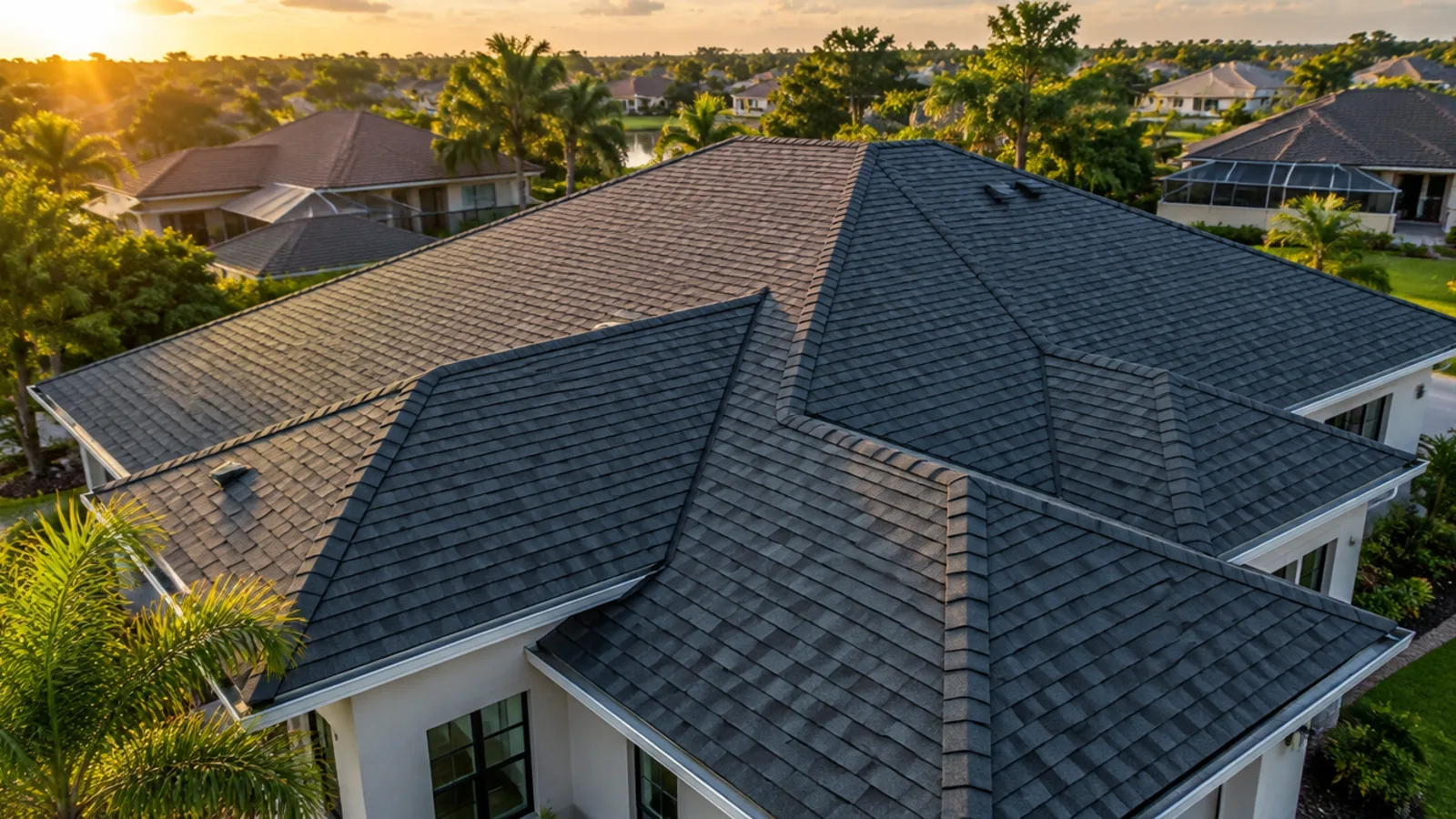
What the covering type changes is the failure mode, and that is more useful than a number. Asphalt shingles fail by losing granules, curling at the edges and going brittle, so they tend to degrade across the whole field at roughly the same rate. Tile is different: the tile itself can be sound while the underlayment beneath it is finished, which is why a tile roof can look perfect and still need stripping and relaying. Metal usually fails at the fasteners, the seams and the penetrations rather than in the panel. Low-slope and coated systems on manufactured housing fail at seams and edges, and those are maintained on a different cycle entirely.
So the first question is not how old is it. It is what is the covering, and is it failing in the way that covering fails at the end, or in one spot for a reason.
Age tells you what to look for. It does not tell you the answer.
One place or everywhere
This is the test that settles more of these than any other, and you can get most of the way through it yourself from the ground and the attic.
Failures concentrated in one place usually have a cause, and a cause is a repair. A split vent boot. A flashing joint at a wall or a chimney. A valley that is carrying more water than it should because of something above it. One slope that takes the weather while the other three are fine. Fix the cause and the roof goes back to working.
Failures spread evenly across the whole roof are a different signal. Granule loss over the full field, curling at the edges on every slope, nails backing out in numbers, brittleness everywhere you touch it. Nothing caused that in particular — the covering has simply reached the end of what it does. Patching one area of a roof in that condition buys you a season and the next failure is somewhere else.
The middle case is the common one and it is where people get sold the wrong thing. A roof with general wear plus one acute failure. That roof is a repair now and a replacement later, and the honest version of the conversation gives you both numbers and a rough idea of the window, rather than rolling the wear into the leak and quoting a replacement.
The deck decides more than the covering does
Underneath the covering is the deck — the plywood or board the whole thing is nailed to. It is the part no one talks about and the part that most often moves a job from repair to replacement.
A sound deck can be re-covered. A deck that has been getting wet in a patch for years cannot, because fasteners will not hold in soft sheathing and anything laid over it fails early. If the deck is going, the covering above it stops being the question.
Signs point to it before anyone opens the roof. A visible sag or dip in a slope, seen best by looking along the plane of the roof rather than straight at it. Dark staining, salt lines or rusted nail points and truss plates in the attic, which mark where water has been arriving. Compacted or discolored insulation in a patch, which means it has been arriving for a while. A spongy feel underfoot, though that is something we check and you should not.
None of that is conclusive from inside, and that is the honest limit of what this page can do for you. The deck is assessed by lifting the covering in the suspect area. Until someone has done that, a replacement quote is partly a guess, and a repair quote has a change order waiting inside it. That is why we write down what happens if the deck is worse than it looks, before the work starts rather than after.
If the deck is going, the covering above it is no longer the question.
What insurance renewal pressure does to the decision
In Florida the roof often stops being a maintenance decision and becomes a policy decision. Carriers have tightened what they will write and renew on older coverings, and a non-renewal notice or a condition attached to a renewal arrives with a date on it. That date changes the calculus whether or not the roof is leaking.
We will not tell you what your carrier will do. We do not know your policy, your carrier's current underwriting, or what an inspector they send will write down. That is between you and your carrier, and anyone in this trade who tells you what the outcome will be is guessing at your expense.
What we will do is separate the two questions so you can see them. One: what condition is the roof actually in, and what does it need on its own merits. Two: what has your carrier asked for, in writing, by when. Those have different answers often enough that it is worth keeping them apart. A roof with real life left in it that a carrier will not renew is a different problem from a worn-out roof, and the paperwork you need is different too.
The pressure is real and it is worth saying plainly: it pushes people toward replacing roofs on a schedule set by an underwriter rather than by the roof. Sometimes that is the right call anyway. Sometimes the roof needs a repair and the insurance situation needs a documented condition report, which is not the same purchase. Get the condition assessed on its own terms first, then decide what to do about the letter.
What we put in writing
Where both options are genuinely real, you get both. A repair scope and a replacement scope, each with what it covers, photographed, in plain language. You compare them yourself rather than take our word for which one you need.
Where only one is real, we say so and say why. A deck that will not hold fasteners rules out a repair, and a single failed penetration on a sound roof rules out a replacement. Either way the reason is in the document with a photograph attached to it.
We will not quote before looking at the roof, over the phone or otherwise. Roofs that look identical from the street are in different condition, and a number given sight unseen is either padded or about to change.
And where the answer is that the roof has life left and this is one failure, that is what we will tell you. Most leaks are a repair.