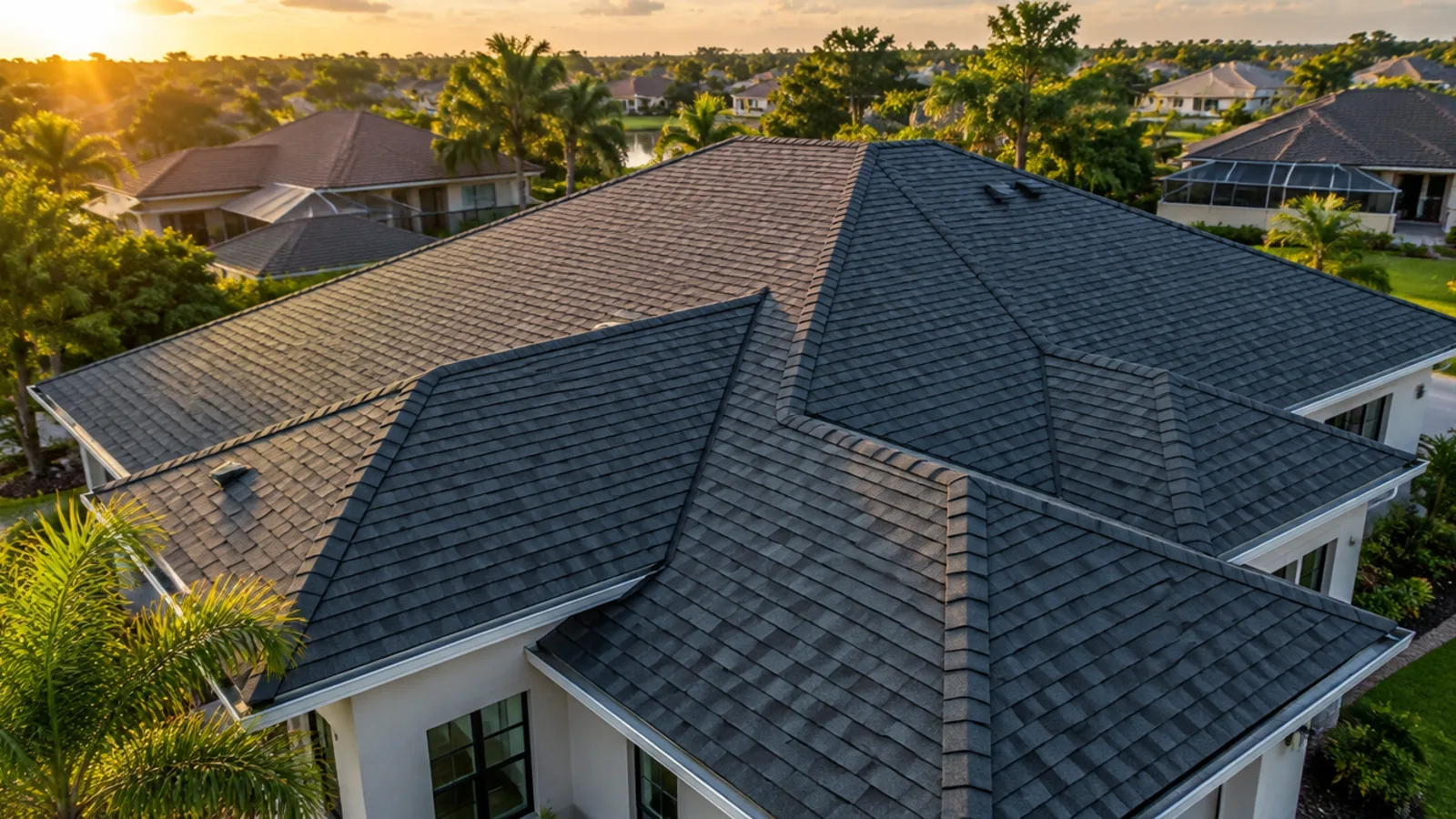
Three different inspections, and only one of them is ours
After a storm people ask for a roof inspection and mean one of three different things. They have different purposes, and in Florida they are not all done by the same person.
The first is a contractor's damage inspection. That is ours. We go up, photograph what we find, and give you a written description of the condition and what repair or replacement would involve. It is not a claim and it is not a verdict on your policy.
The second is your insurer's adjuster inspection. The carrier sends its own person, and that inspection is what decides the claim. Our written scope is something you can hand to them so the conversation starts from documentation rather than memory, but we do not attend on your behalf and we do not decide the outcome.
The third is a wind mitigation inspection, which is a separate state form about construction features and insurance credits, not about storm damage at all. Florida Statute 627.711(2) sets out who may complete it: a licensed home inspector with hurricane mitigation training, a building code inspector, a general, building or residential contractor, a professional engineer, an architect, or anyone else the insurer recognizes as qualified. Roofing is its own contractor category and is not on that list, so we do not sign it.
Three inspections, three purposes, and only one of them belongs to the roofer. Knowing which you need saves a wasted appointment.
What wind does to a roof here depends on where in the county you are
Hernando Beach is the county's only genuinely coastal community, and canal-front homes there take open-water wind off the Gulf along with salt-laden air. On those roofs the first places to look are edges, corners and perimeter metal, because that is where uplift starts and where fasteners corrode fastest.
The Spring Hill subdivisions west of US-19 are a different problem. They were platted in overlapping phases, so whole streets reach the end of a roof's service life within a few years of one another. A storm passing over that kind of street tends to expose roofs that were already close to the end rather than destroy roofs that were fine.
Brooksville sits on genuinely hilly ground with older, more complicated roof lines near the downtown square, often carrying more than one covering layered over the years. Complicated roofs have more flashing, more valleys and more penetrations, which is simply more places for wind-driven water to get in.
Out east around Ridge Manor and Nobleton the roofs are under heavier tree canopy on larger lots. There the storm damage that matters is frequently impact rather than uplift — limbs, and what comes off a neighboring tree at speed.
Brookridge is different again, built primarily around manufactured and modular housing with low-slope metal and coated systems that stay watertight through sealed seams and coatings. Wind damage on those shows up at seams and edges, and it is assessed differently from a pitched shingle roof.
The damage you cannot see from the driveway
The most common storm damage on a shingle roof is not a hole. Wind gets under a covering, lifts it, and it settles back down. From the ground it looks untouched. It is no longer sealed, so it no longer sheds water reliably, and the next ordinary rain finds its way in.
Fasteners back out. Flashing at a wall or a chimney shifts slightly. Tile slips or cracks without leaving anything on the ground. Decking underneath can be soft in a patch you cannot identify from outside. None of that is visible from a driveway, and none of it is reliably visible from a photograph taken from the yard.
This is the reason an 'it looks fine' from the driveway is not useful information after a storm, and also the reason we would rather you did not climb up to check. Wet roofs are slippery, tile breaks underfoot and turns one repair into two, and a fall from one storey does real harm.
What we will and will not do
We will photograph what we find and give you a written scope in plain language, and there is no charge for that. If water is coming in we will tarp on the first visit rather than leave it open while materials are ordered.
We will not file your insurance claim, and we will not tell you what your carrier is going to pay. Anyone who gives you a figure before an adjuster has been out is guessing.
We will not sign a wind mitigation form, for the reason set out above.
And we will tell you when there is no storm damage. A roof at the end of its service life that finally started leaking the week of a storm is a roof at the end of its service life. Saying so costs us a job and keeps you out of a claim you were not going to win.