The day before, and what arrives first
The permit comes first, before anything is on site. Roof replacements in Hernando County are permitted work, and the permit is pulled by the contractor under the license — ours is GenX Roofing LLC, Florida Certified Roofing Contractor, license CCC1333347. The permit card goes up on site and stays there until the job is closed out. How long the county takes to issue is not in our control, and we will tell you where the application is rather than give you a date we invented.
Materials usually land the day before or first thing on the morning of day one. On a shingle job that is bundles stacked on the roof itself or on the ground near the ladder, plus rolls of underlayment, drip edge, vent boots and flashing metal. Stacking on the roof spreads the weight across several slopes on purpose. It is not stored in one pile.
The dumpster comes on the morning of day one and goes on the driveway, on boards, as close to the main tear-off slope as it can get. Driveway is the usual answer because the street needs clearing for the county and because dragging debris further across a yard does more damage than the dumpster does. If the driveway cannot take it, we will say so when we look at the roof rather than on the day.
What you need to do is short. Both vehicles out and parked on the street or at a neighbor's. Gates unlocked. Anything hanging on an exterior wall under the eaves taken down. Patio furniture, grill and potted plants moved out from the perimeter of the house. Pets inside and preferably in a back room, because the noise is constant and the gates get opened.
Day one: tear-off, and what the deck turns out to be
Tear-off starts early and it is the loudest part of the whole job. The old covering comes off in sections, down to the bare deck, and goes straight into the dumpster. Underlayment, old drip edge, old vent boots and old flashing come off with it. Nothing gets laid over the top of the old material.
Inside the house this is the hour people are not ready for. Hammering and shovels on the deck shake the structure. Pictures come off walls on their own if you have not taken them down. Ceiling fans and light fixtures swing. If you have anything fragile on a shelf, lay it flat the night before.
The attic is the other thing. Fifty years of dust sitting on the top of the drywall gets shaken loose and comes down through the ceiling, and daylight comes through the deck in places for a few hours. Anything stored in the attic should be covered with plastic sheeting or moved out. We will sheet what we can reach, but a full attic is faster for you to clear than for us to work around.
Then the deck is exposed and we find out what we are actually dealing with. Soft sheathing, delaminated plywood, rot around a penetration, a patch under an old valley where water has been arriving for years — none of that is visible from the ground and none of it is reliably visible from the attic underneath. Rotten sheathing gets cut out and replaced in whole sheets, and that is where a schedule moves. A couple of sheets is an hour. A whole slope is a trip to the supplier and a change to the scope, which we show you, photograph and write down before we install anything. Nobody gets a surprise on the final paperwork.
Nobody can tell you what the deck looks like until the covering is off it. That is why the change order is written before the plywood goes on, not after.
Dry-in: the stage that makes the house watertight
Once the deck is sound, drip edge goes on at the eaves and underlayment goes down over the whole deck, fastened to the pattern the product and the code call for. Valley metal and new flashing at every wall, chimney, skylight and lanai tie-in go in as part of this stage, lapped in the order that sheds water rather than sealed across the top.
That point — deck sound, underlayment down, flashings in — is dry-in, and it is the milestone that matters to you more than any other. A roof that is dried in is watertight. It can take a rain overnight and the house stays dry even though the finished surface is not on yet.
We will not leave a roof open overnight. Tear-off is sized so that whatever gets opened gets dried in the same day. If the weather or a deck surprise means the slope cannot be closed, what gets opened is reduced rather than the day being extended into the dark.
In most counties a dry-in inspection by the building department happens at this stage, before the final covering goes over it, because once the surface is on nobody can see the underlayment or the fastening pattern again. That inspection is scheduled with the county and it happens on their timetable, not ours. It is one of the two places a job legitimately waits on somebody outside the crew.
The final surface, cleanup, and the magnet
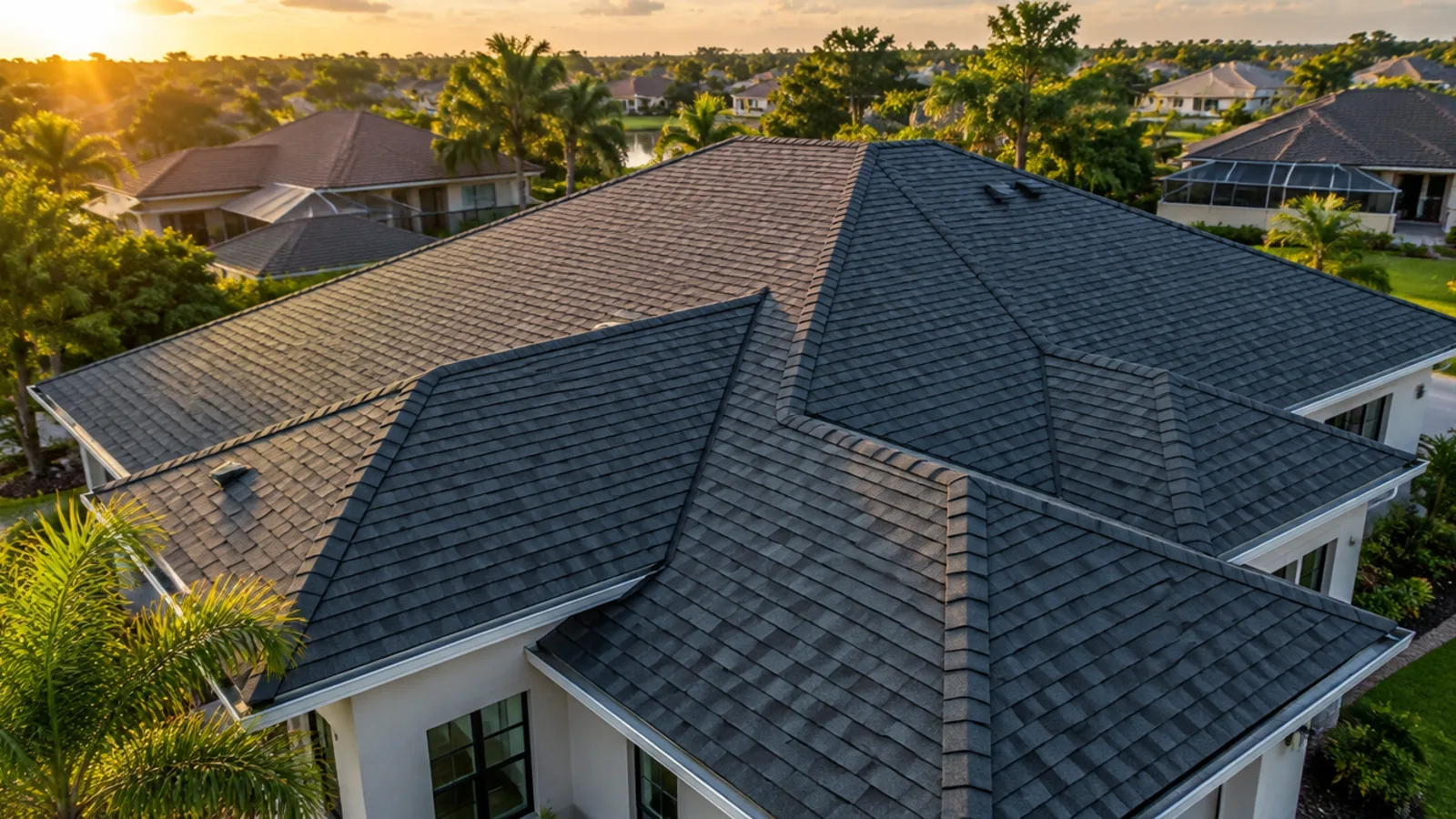
The finished covering goes on over the dried-in deck, starting at the eaves and working up, with new vent boots and new pipe flashings set as the courses reach them. Ridge vent or the ventilation detail the roof is designed around goes on last at the peak. On a straightforward single-story shingle roof this is most of day two. A complicated roof line with several valleys, a chimney and a lanai tie-in takes longer, because every joint is separate work. Tile is a different schedule again.
Cleanup is part of the job and not a favor. Debris out of the gutters and off the flat surfaces, the perimeter of the house walked, the landscaping checked, and the dumpster hauled. The dumpster usually goes the same day the covering finishes or the morning after.
Then the magnet. A rolling magnet goes over the driveway, the walkways, the grass around the whole perimeter and anywhere the crew staged material, because tear-off throws old nails further than people expect. We do it more than once and in more than one direction. Even so, keep bare feet and bike tires off the grass for a week and tell us if you find anything — we will come back and sweep again.
Last comes the county final inspection, which closes the permit. That is scheduled with the building department and happens when they get there. The roof is finished and working before that visit; what the final inspection does is close the record on the permit, and you want it closed, because an open permit on a roof is a problem that turns up years later when the house is sold.
The roof is working the day the covering is on. The permit is not closed until the county has been out, and those are two different dates.
Weather, and what stops and restarts the job
Rain stops roofing. Not as a preference — a wet deck cannot be dried in properly, underlayment does not bond or fasten the way it should to wet sheathing, and nobody walks a wet roof. An afternoon storm in the summer can take out half a working day and there is nothing to be done about it.
What a stop looks like depends on where the job is. If the roof is dried in, a stop costs you nothing but days on the calendar — the house is watertight and the crew comes back when it dries. If a slope is open, it gets dried in or sheeted before anyone leaves, every time. That rule is why we do not tear off more in a morning than we can close by evening, and why a forecast changes the plan for the day rather than the plan for the week.
Restarting is not instant either. A deck that got rained on has to dry before underlayment goes over it, which on a summer morning can mean waiting until the sun has been on it for a few hours. A crew that got pulled off your roof on Tuesday may be finishing somebody else's Wednesday morning before coming back.
The two honest answers about timing are these. Day count is an estimate, not a promise, and the two things that move it are the deck and the sky. We will tell you at the end of each day what got done, what is left, and what tomorrow depends on.