Ask what was done before the crew leaves
The most useful check happens before the truck pulls away. Ask what the entry point was, what was replaced, and whether there are photographs of it. If you can see a repair in a picture, you can judge it later.
If the leak was at a wall, a chimney, a skylight or a pipe, ask about the flashing. Was the metal replaced, or was the old metal resealed? Both are honest answers. They are not the same repair.
Get the answers in writing, even if it is only a short note on the invoice. If water shows up again, that note tells the next person where to start.
How the patch should look from the ground
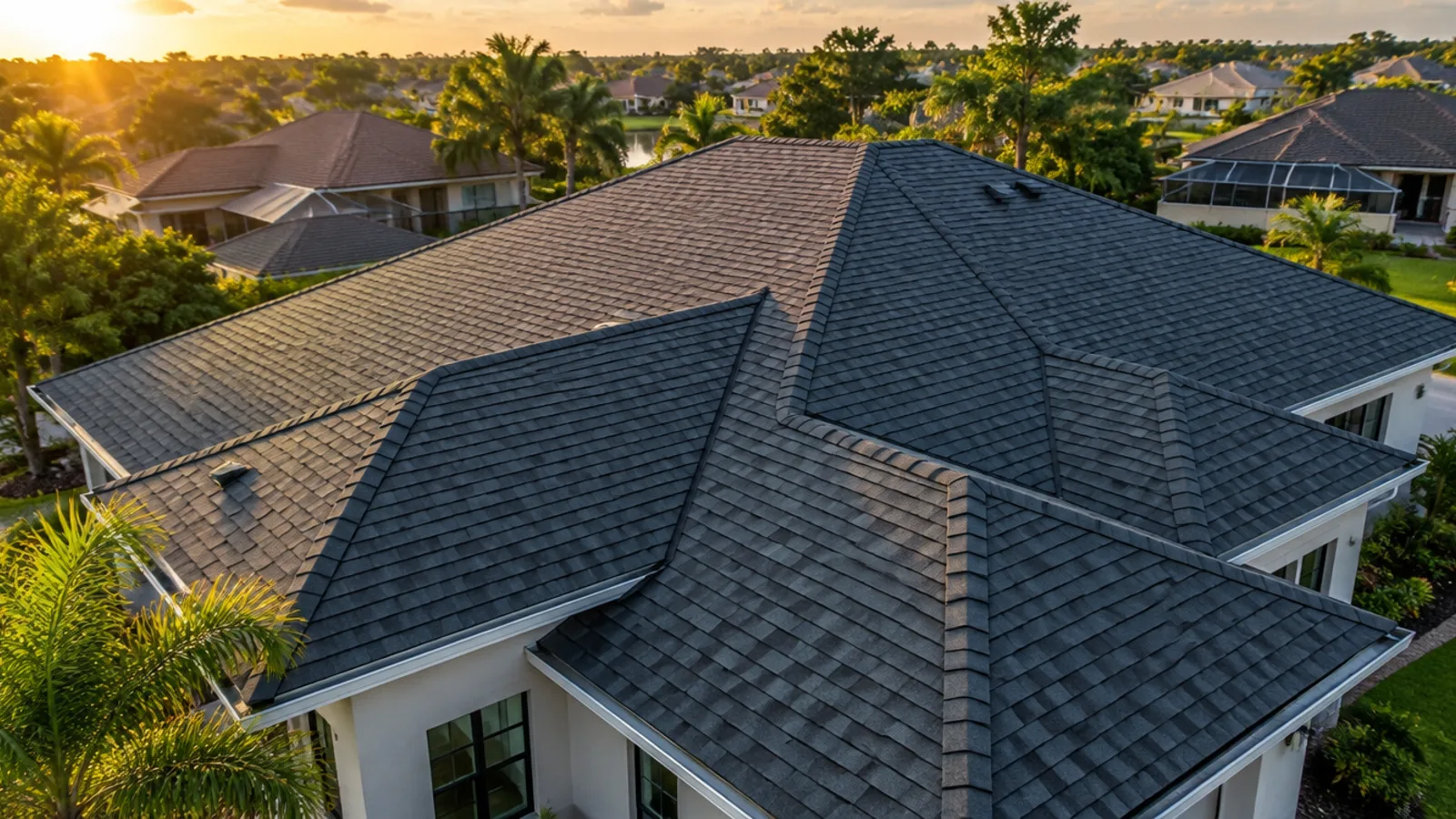
Stand back far enough to see the repaired area and the rows of shingles around it. New shingles should lie flat and line up with the rows on either side. The bottom edge of each row should run straight through the patch. It should not step up or down where the new material starts.
A color difference is normal. New shingles look darker or brighter than ones that have been out in the sun, and they fade toward the rest of the roof over time. That is cosmetic.
A shingle with a lifted corner, an edge that sits higher than the ones beside it, or a patch that bulges is worth a question. So is a nail head you can see on the face of the roof. Binoculars from the yard are enough for all of this. Stay off the roof.
Flashing, boots and the cleanup
If the repair was at a wall or chimney, look for metal along the joint. New flashing is usually brighter than the old. A fresh bead of caulk or roofing cement along the joint with no new metal means it was resealed, not replaced. Sealant has its uses, but in this sun it hardens and cracks, and a joint held by sealant alone tends to open again.
If a pipe boot was the problem, the new boot should sit flat on the shingles and its rubber collar should fit snug around the pipe. A gap between the rubber and the pipe is where water got in last time.
Then walk the yard, the driveway, the beds and the ground under the work. Look for nails, pieces of old shingle and torn underlayment, and check the gutters and downspouts for debris. A careful crew sweeps with a magnet and clears the gutters before it leaves. If they missed some, it is reasonable to ask them to come back.
Resealed and replaced are both honest answers. They are not the same repair.
The first real rain
You will not know whether the repair holds until it rains hard. A light shower does not carry enough water to find a small opening. A long afternoon storm does.
Before that rain, photograph the ceiling where the old stain was. If you can reach it, mark the edge of the stain lightly in pencil. Afterward, compare. A dry stain that stays the same size is old water. A stain that darkens, spreads past the line or feels damp is new water.
If you can get into the attic safely, look at the underside of the roof deck below the repair once the rain stops. You want to see dry wood and no fresh drips on the insulation. Old staining from before the repair will still be there, and on its own it does not mean anything.
When to call back and what is normal
Call back about any of these: a new drip, a stain that grows or comes back wet, a shingle or flashing edge that has lifted, a patch that has shifted after wind, or a nail backing out of the repaired area. Call back if you hear dripping in the attic during rain. None of these should wait for the next storm.
These are normal and not worth a call: new shingles that do not match the old ones, a few loose granules in the gutter from new material, a faint smell of roofing cement for a day or two, and an old stain that stays dry. New shingles also need some warm days to seal down fully, so a tab that looks slightly loose in the first week can settle on its own. If it is still loose after that, ask.
When you call, say what you saw, where it was, and when it rained. Send the before and after photographs. That history gets you an answer faster, whether the problem turns out to be a missed entry point, a detail that needs another look, or nothing at all. Work performed by GenX Roofing LLC, Florida Certified Roofing Contractor, license CCC1333347.